Understanding the wild.
Answers to common questions about African wild dogs, their ecology and the threats they face. This guide brings together published information from conservation organisations and researchers; it is not original field research by Wilderness Again.
Our conservation focus is East Africa. Species-wide facts below are labelled separately from our work in Kenya and Tanzania.
What is an African wild dog?
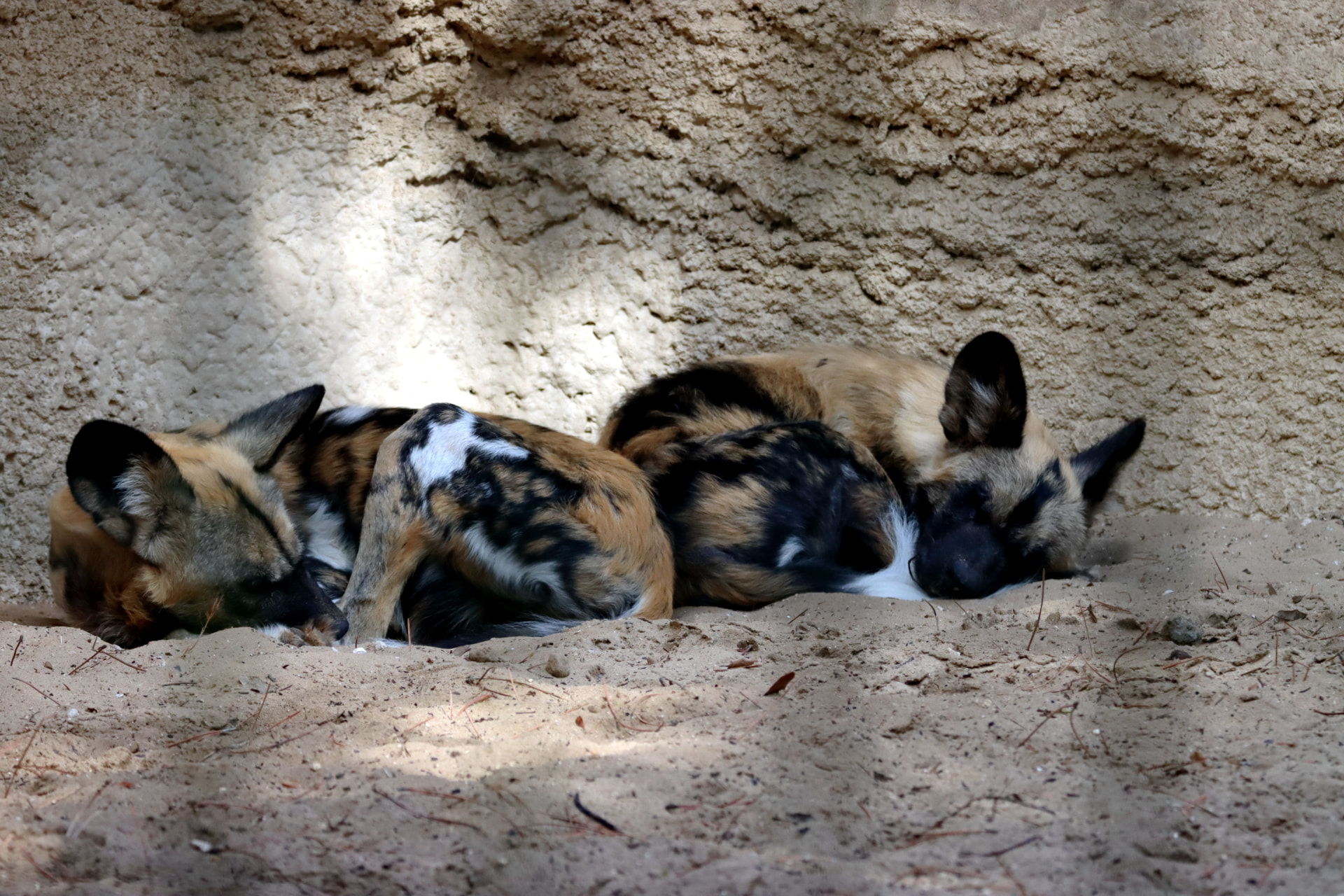
The African wild dog (Lycaon pictus) is a wild carnivore native to sub-Saharan Africa. Its distinctive features include large, rounded ears, a mottled coat and a white-tipped tail. Each individual has a unique coat pattern, which helps researchers identify and monitor animals in the field.
Why are African wild dogs endangered?
African wild dogs are classified as Endangered on the IUCN Red List. Major threats include habitat loss and fragmentation, conflict with people and infectious diseases such as rabies and canine distemper. Their wide-ranging movements can bring them beyond protected areas, exposing packs to roads, snares and livestock-related conflict.
Where do African wild dogs live?
African wild dogs survive in scattered populations across sub-Saharan Africa, with the largest populations in Southern and East Africa. They occupy a variety of habitats, including grasslands, woodland and forest. Tanzania remains especially important for the species. Wilderness Again focuses on East Africa, starting in Laikipia in Kenya and the Greater Ruaha ecosystem in Tanzania.
What do African wild dogs eat?
African wild dogs are carnivores. They hunt medium-sized hoofed mammals, including gazelles, with prey varying by landscape and availability. Hunting is cooperative: pack members work together to pursue prey. Protecting wild prey populations is therefore part of protecting wild dogs and their habitats.
How do African wild dog packs work?
African wild dogs are highly social and live in cooperative packs that hunt and breed together. WWF describes packs of around ten individuals, although some contain more than forty. Pack sizes vary, so a single typical pack size should not be treated as a fixed rule for every population.
How many African wild dogs are left?
Population estimates depend on the year, geographic coverage and whether a source counts all animals, adults and yearlings, mature individuals or breeding packs. African Wildlife Foundation gives an estimate of approximately 6,600 animals, while Oxford’s WildCRU describes fewer than 700 packs globally. These are different measures, not interchangeable counts. Neither figure is an estimate specifically for East Africa.
Why are African wild dogs important?
African wild dogs help regulate prey populations as part of functioning ecosystems. Their conservation also depends on healthy prey populations and connected habitats. Protecting the landscapes they use can support wider biodiversity, while their distinctive behaviour makes them valuable for conservation-focused tourism.
How can domestic dog vaccination help wild dogs?
Rabies and canine distemper are serious threats to African wild dogs. Vaccinating domestic dogs around wildlife areas is one approach to reducing the risk of disease transmission. Effective programmes depend on veterinary expertise, disease surveillance and local participation; vaccination does not replace the need to protect habitat or reduce conflict.
Why do wild dogs need wildlife corridors?
African wild dogs are wide-ranging animals that occur at low population densities. Habitat fragmentation can isolate populations and increase exposure to human activity. Connected habitats and wildlife corridors allow movement between landscapes and are an important part of conservation planning, alongside work with communities living near wildlife.
How do researchers monitor African wild dogs?
Researchers use approaches including GPS collars, camera traps and community interviews to understand wild dog movements, habitat use and threats. Individual coat patterns also help identify animals. Monitoring provides evidence for decisions about habitat connectivity, disease prevention and coexistence; it does not by itself remove the threats facing a pack.
Sources & further reading
Estimates can change as assessments are updated. Always check a source’s definitions and publication date before comparing population figures.
African Wildlife Foundation — African wild dogWWF — African wild dogsUniversity of Oxford WildCRU — African wild dogs